

A constitutional amendment changes the Tennessee Constitution, the state’s highest law.
Three proposed amendments to the Tennessee Constitution will appear on the ballot this year.
Voters can vote YES or NO on each amendment.

How Does an Amendment Pass in Tennessee?
For an amendment to become part of the Tennessee Constitution, it must receive enough YES votes.
The number of YES voters must be more than half of the total votes cast for governor in the general election.
Example: If 2 million people vote for governor, an amendment would need more than 1 million YES votes to pass.
Source: https://www.capitol.tn.gov/Archives/House/104GA/Publications/LegManual/appendix%20V.pdf?utm_source
Bail Amendment
What does it do?
Bail deals with whether a person can be released from jail while waiting for their case to be decided.
A person waiting for trial has been charged with a crime but has not been convicted.
Right now, the Tennessee Constitution generally gives people a right to bail before trial. Bail can be denied for a capital offense, which means a crime where the punishment could be execution by the state of Tennessee. In Tennessee, first-degree murder is a capital offense.
The amendment would allow judges to deny bail for more charges, including:
An act of terrorism
Second-degree murder
Aggravated rape of a child
Aggravated rape
Grave torture
Other offenses where, as of November 3, 2026, a person convicted of the offense could not be released until serving at least 85% of the sentence.
Being charged with one of these offenses would not automatically mean a person is denied bail.
A judge could deny bail when the required legal standard is met. This means there must be strong evidence that the person committed the crime.
The amendment would also require a judge or magistrate to explain their reasons for granting or denying bail in the court record.
This amendment would allow more people to be held in jail before they have been convicted. Pretrial detention can affect a person’s job, income, housing, education, childcare, and ability to care for their family.
What does your vote mean?
YES: Change the Constitution to allow judges to deny bail for the expanded list of charges when the required legal standard is met.
NO: Keep the current constitutional rule, which generally allows bail to be denied only for capital offenses when the required legal standard is met.
Sources:
Tennessee Constitution :: Article I - Declaration of Rights. :: Section 15
Legislation 114th General Assembly (2025-2026)
Constitutional Amendment #1 | Voter Guide: 2026 Midterm General Election • Tennessee Lookout
Property Tax Amendment
What does it do?
Tennessee does not currently have a state property tax. Property taxes are collected by local governments, such as counties and cities.
The amendment would change Article II, Section 28 of the Tennessee Constitution. It would prohibit the Tennessee General Assembly from creating or allowing a state property tax.
The amendment would not eliminate or change local property taxes paid to counties and cities.
The amendment would take away one possible way for the state to raise money in the future. Revenue from state property taxes could be used for public services, including schools, housing, mental health services, youth programs, and other community needs.
What does your vote mean?
YES: Change the Constitution to prohibit the state from creating a property tax.
NO: Keep the Constitution as it is now.
Sources:
Tennessee Constitution :: Article II - Distribution of Powers. :: Section 28
https://wapp.capitol.tn.gov/apps/BillInfo/Default?BillNumber=SJR0001&utm_source=
Crime Victims’ Rights Amendment
What does it do?
Tennessee’s Constitution already gives people who are victims of crime certain rights.
These include the right to:
Get information about court proceedings.
Attend court proceedings where the accused has a right to be present.
Be heard at important parts of a case.
Talk with prosecutors.
Be protected from intimidation, harassment, and abuse.
Receive restitution from the person convicted of the crime.
The amendment would replace the current section of the Constitution with a longer and more detailed list of rights.
The amendment would give victims more opportunities to participate in criminal and juvenile court proceedings. Victims would also have expanded rights to receive information about parole and release, have their safety considered in certain release decisions, and take steps to enforce their rights.
The amendment also says these rights must be interpreted in a way that protects everyone’s right to due process, or fair treatment under the law.
The ACLU has raised concerns about similar victims’ rights amendments in other states. It argues that some expanded victims’ rights can conflict with the rights of people accused of crimes, including due process and the presumption of innocence.
What does your vote mean?
YES: Replace Tennessee’s current constitutional victims’ rights with the expanded rights in the amendment.
NO: Keep the current victims’ rights section of the Constitution.
Sources:
Tennessee Crime Victims’ Bill of Rights
https://wapp.capitol.tn.gov/apps/BillInfo/Default?BillNumber=HJR0048&ga=114&utm_source=
‘Victims’ Rights’ Proposals Like Marsy’s Law Undermine Due Process | American Civil Liberties Union
State of Black Tennessee Town Hall Survey Report
About the Survey
On Saturday, September 26, 2026, organizers at SMC’s State of Black Tennessee Town Hall conducted a survey with participants about three proposed amendments to the Tennessee Constitution that will appear before voters this November.
Before participants completed the survey, they received an overview of the proposed constitutional amendments and participated in breakout discussions to further analyze what each amendment could mean for our communities. Participants were then asked how they would vote on each amendment and were given an opportunity to share more thoughts.
This survey is not intended to represent the views of all Tennessee voters. Instead, it provides a recap of how 85 people who participated in the State of Black Tennessee Town Hall were thinking about the amendments after developing a collective analysis.
Who participated:
85 people completed the survey.
Participants represented a range of ages:
28 (32.9%) were under 18
13 (15.3%) were ages 18–25
42 (49.4%) were over 25
Amendment 1: Bail
Amendment 1 would expand the offenses for which a person accused of a crime could potentially be held without bail before trial. The amendment includes capital offenses, terrorism, second-degree murder, aggravated rape of a child, aggravated rape, grave torture, and certain other offenses requiring at least 85% of a sentence to be served. It would also require judges or magistrates to explain their reasons for granting or denying bail on the record.
How Participants Voted
75.3% voted No.
24.7% voted Yes.
That was 64 No votes and 21 Yes votes among the 85 people.

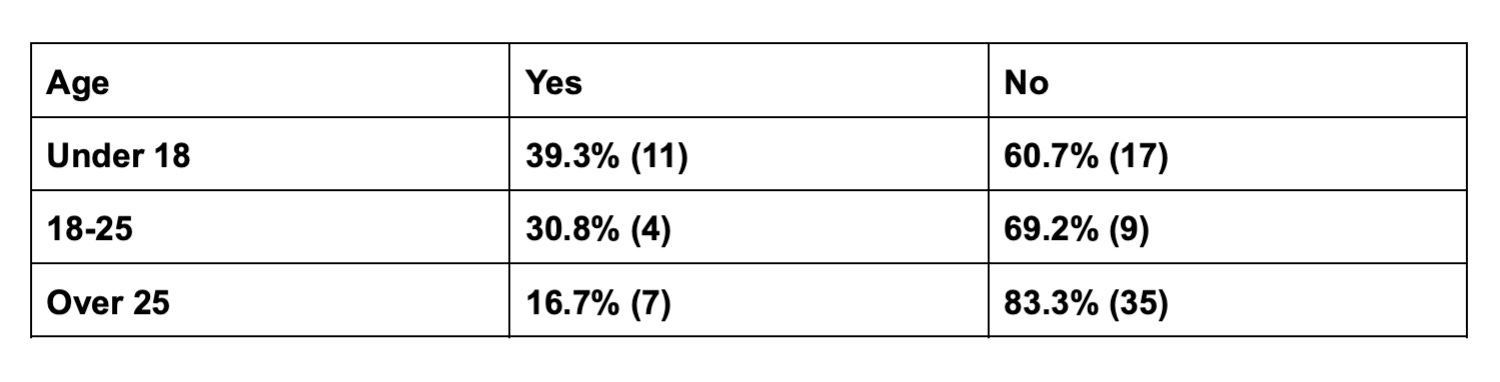
Amendment 2: State Property Tax
Amendment 2 would amend the Tennessee Constitution to prohibit the Tennessee General Assembly from creating or allowing a state property tax.
How Participants Voted
72.9% voted No.
27.1% voted Yes.
That was 62 No votes and 23 Yes votes among the 85 people.
By Age:
What participants said
The written responses suggest that some participants were trying to understand not simply whether they supported property taxes, but what permanently restricting a state property tax in the Constitution could mean for public revenue and services.
Several people specifically raised concerns about funding for education, schools, libraries, infrastructure, and other public needs. Others expressed uncertainty and said they wanted more information about how the amendment could affect Black homeowners, businesses, nonprofits, corporations, and low income communities. One respondent described the issue as a “double edged sword,” reflecting the uncertainty expressed in several comments.
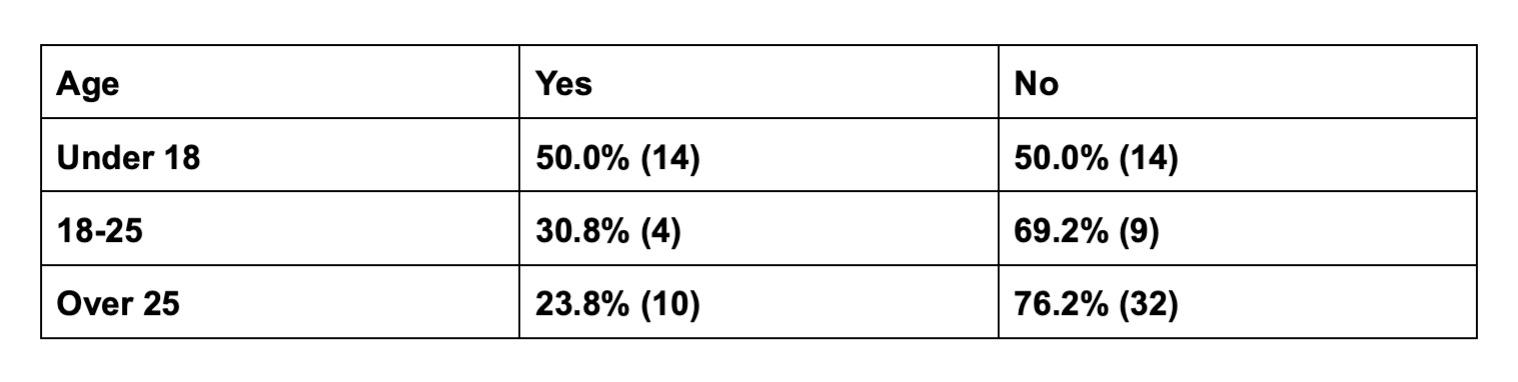
Amendment 3: Crime Victims’ Rights
Amendment 3 would replace the current victims’ rights provision of the Tennessee Constitution with a more detailed list of rights. Among other changes, it addresses participation in criminal and juvenile proceedings, parole, restitution, protection from harassment and intimidation, notification of release or transfer, and consideration of victim, family, and public safety in post judgment release decisions.
How Participants Voted
65.9% voted No.
34.1% voted Yes.
That was 56 No votes and 29 Yes votes among the 85 people.
By Age:
What participants said
Responses to Amendment 3 reflected competing considerations. Some people expressed concern about how expanded victims’ rights could interact with the rights of accused people and racial disparities in the criminal legal system. Some people were concerned that the new protections could give police officers or government agencies more protections, instead of helping everyday people.
Other participants saw value in stronger protections for victims. One respondent acknowledged concerns about police potentially benefiting from the amendment but said that people in the community also need these protections.
SMC’s Commitment
Our goal is to make sure our community understands what is on the ballot, what could change, and what questions community members are raising as they prepare for election day.
The State of Black Tennessee Town Hall discussions and survey demonstrate the importance of creating spaces where community members, including young people who may not yet be eligible to vote, can study major policy questions, ask critical questions, discuss their potential impact, and develop their own analysis about decisions that could shape Tennessee’s future.